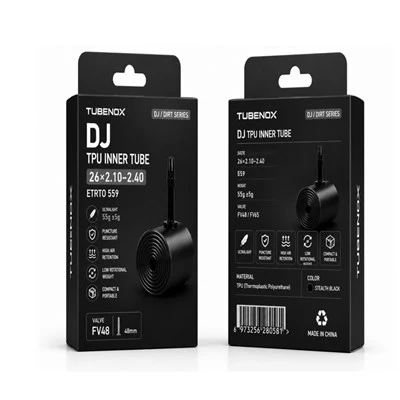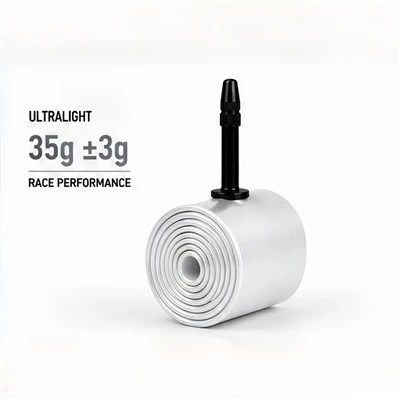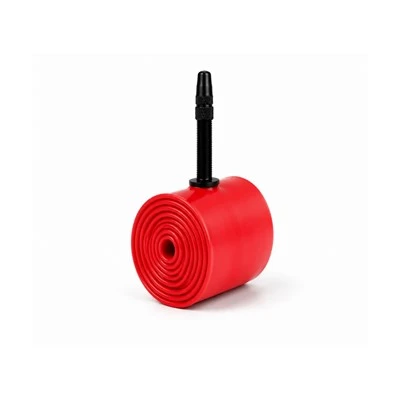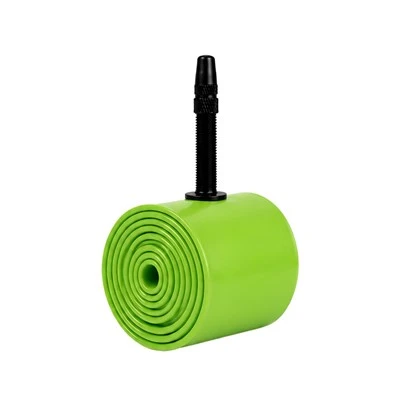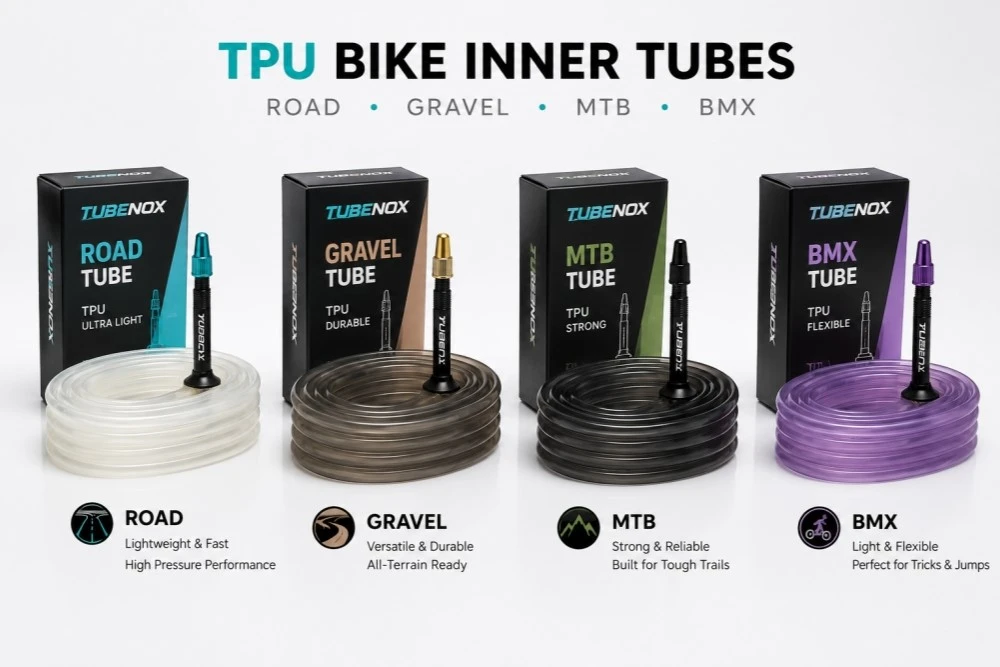
Four years ago, TPU inner tubes were a niche product sold by three boutique brands to weight-obsessed racers. In 2026, they're showing up on spec sheets from major OEMs, in bike shops at every price point, and in the shopping bags of commuters who've never heard of a watt.
If you're sourcing tubes for a brand, a shop, or a distribution line, here's what's actually changed - and what hasn't.
1. The 28c tire killed the 23c tube
Walk into a bike shop in 2022 and half the road bikes on the floor came with 25c tires. Walk in today and 28c is the default, 32c is common, and 23c is effectively gone except in pro race pelotons.
This matters for tube buyers because tube spec ranges had to catch up. The old "700×18–28c" tube - which covered the 25c that used to be standard - now leaves the 28c–32c rider underserved. The market has responded with a new SKU: 700×23–32c, which covers everything from a slightly narrow race tire to a wide all-road tire.
What this means for buyers: if you're still only stocking 18–28c tubes, you're missing the growing 28–32c segment. Brands that added the 23–32c SKU in 2024–2025 are the ones winning shelf space now.
2. TPU stopped being a race-day novelty
In 2022, TPU tubes were positioned as "ultralight race day only" products - thin, fragile, expensive, and marketed to people who weighed their water bottles.
That's changed. Three things happened:
- Wall thickness options appeared. Brands now offer 25 g (race), 29–34 g (do-it-all), and 36–46 g (training/endurance) TPU tubes. The market realized you don't have to choose between light and durable.
- Price came down. A TPU tube that cost \(40 retail in 2021 now retails for \)20–$25. At that price, the "is it worth it?" question answers itself.
- Durability data came in. After five years of real-world use, TPU tubes are holding up. They're not butyl, but they're not the fragile race toys people feared.
- What this means for buyers: TPU is no longer a niche product to stock as a "premium" option. It's becoming the default upgrade tube. Distributors who still treat TPU as a novelty SKU are leaving margin on the table.
3. Tubeless didn't kill the inner tube
We've been hearing "tubeless is the future" for ten years. Inner tube sales haven't collapsed. Here's why:
Tubeless setups are fussy. Sealant dries out, valves clog, and installation is messier. A lot of riders who tried tubeless went back to tubes.
E-bikes and heavy riders still get flats on tubeless because the tire bounces on big bumps.
Spare tubes still live in every saddle bag. Even tubeless riders carry a tube as a backup.
The inner tube market isn't shrinking. It's shifting from butyl to TPU.
4. The "one SKU" play is winning
Bike shops used to stock 5–6 different road tube SKUs by tire width. The trend now is toward fewer SKUs that cover wider ranges:
One tube that covers 18–32c instead of separate 18–23c and 25–28c tubes.
One valve length (65 mm) that works for most rims instead of stocking 45, 65, and 85.
Shops want to simplify. Brands that offer a "one tube does everything" SKU are winning shelf space.
5. Colors are becoming a buying factor
This is new. Five years ago, every inner tube was black. Now:
Brands are matching tube colors to their kits and packaging.
Pink, orange, gold, and blue tubes are selling on visual appeal alone.
Women-specific lines are demanding non-black tubes.
Gift sets and premium retail are using tube color as a differentiator.
What this means for buyers: if your supplier only makes black tubes, you're missing a segment. Custom color capability is now a table stake, not a premium option.
6. What we're seeing from our customers
We manufacture TPU tubes out of Shenzhen, and the shift in what brands order tells the story:
2022: Most orders were 25 g race tubes in black.
2024: Orders split between 25 g race, 34 g all-round, and 36 g training.
2026: The fastest-growing SKU is the 29 g / 23–32c tube - the one that fits the tires people actually ride.
Custom color requests tripled year-over-year.
First-order MOQs are getting smaller as new brands test TPU without committing to container loads.
What to stock in 2026
If you're a distributor or bike shop planning your road tube range for the next 12 months:
Add the 23–32c SKU. It's the fastest-growing size.
Stock TPU in three weight classes (25 g, 34 g, 36 g), not just one "ultralight" option.
Offer at least one non-black color. Pink, orange, or custom.
Don't drop butyl yet. It's still the default for commuter bikes and price-sensitive buyers.
Consider 650c. It's a small market, but almost nobody stocks TPU tubes in it.
About TUBENOX
We manufacture TPU inner tubes for road, gravel, MTB, and BMX bikes out of Shenzhen. If you're a brand, distributor, or retailer adjusting your tube range for 2026, send us your spec and we'll tell you which SKUs move fastest in your market.
Email: jake@tubenox.com · WhatsApp: +86-136-1308-5191.