The European Union's Packaging and Packaging Waste Regulation, commonly known as the PPWR, began to apply across the EU on August 12, 2026.
For bicycle brands, distributors and private-label suppliers, the regulation makes packaging design more than a visual or marketing decision. Material selection, packaging weight, empty space, recyclability and technical documentation are becoming increasingly important parts of product development.

At TUBENOX, we are reviewing our TPU bike inner tube packaging options to help customers prepare for this changing European market.
What Is the PPWR?
Regulation (EU) 2025/40 covers packaging and packaging waste placed on the European Union market, regardless of the packaging material or its country of origin.
The PPWR entered into force on February 11, 2025, and its provisions began applying on a phased basis from August 12, 2026. Its broader objectives include:
- Reducing unnecessary packaging and packaging waste
- Minimizing packaging weight and volume
- Improving packaging recyclability
- Increasing the use of recycled materials where applicable
- Establishing more consistent packaging rules across EU countries
- Supporting a more circular European economy
Several additional measures will be introduced in stages. A harmonized EU packaging labelling system is expected from 2028, while recyclability requirements, empty-space limits and certain other packaging measures will apply from 2030.
The European Commission aims to make all packaging placed on the EU market recyclable in an economically viable way by 2030.
Why PPWR Matters to Bicycle Inner Tube Brands
A bicycle inner tube is a relatively compact product, but the packaging used to sell and transport it still falls within the scope of EU packaging rules.
This can include:
- Individual retail boxes
- Plastic bags or protective sleeves
- Printed labels and stickers
- E-commerce shipping packaging
- Master cartons
- Grouped and transport packaging
- Pallet wrapping and straps
Therefore, a TPU bike inner tube brand selling in Europe may need to review not only the tube itself, but also every packaging component used between the factory and the final customer.
Packaging responsibilities may also involve manufacturers, EU importers, distributors, fulfilment service providers and brand owners.
Compact TPU Inner Tubes Can Support Smaller Packaging
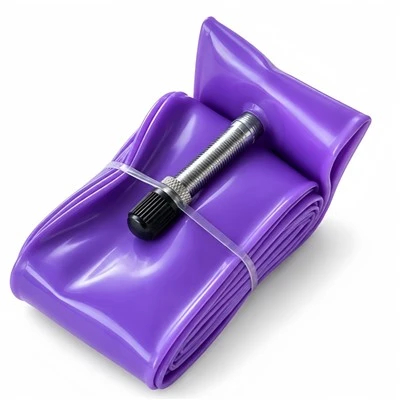
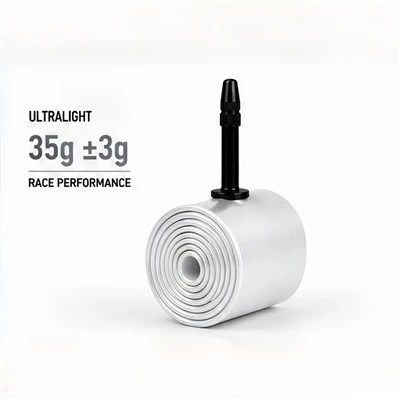
One practical advantage of a TPU bicycle inner tube is its compact rolled size.
Compared with many conventional butyl inner tubes, a lightweight TPU tube can generally be packed into a much smaller retail box. This creates opportunities to reduce:
- Retail packaging dimensions
- Packaging material consumption
- Unused space inside the box
- Carton volume per shipment
- Storage requirements
- Shipping weight and volume
The tube material alone does not make a product PPWR-compliant. However, a compact TPU inner tube can give bicycle brands greater flexibility when developing a packaging system based on material efficiency and reduced volume.

TUBENOX Packaging Development for the EU Market
TUBENOX offers OEM and private-label packaging for road, gravel, MTB and BMX TPU inner tubes.
For customers preparing products for the European market, we can develop simple, compact packaging configurations such as:
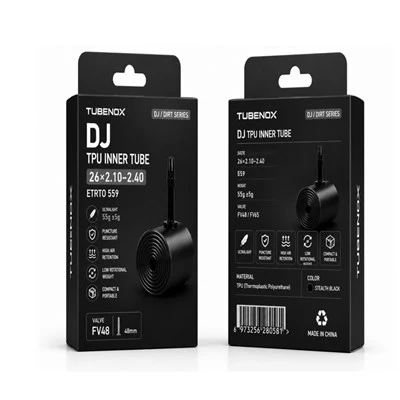
Right-Sized Retail Boxes
The box dimensions can be matched to the rolled tube instead of using an oversized universal carton. This reduces empty space while keeping the tube and valve adequately protected.
Paper-Based Packaging Options
Depending on the product and protection requirements, customers can select paperboard retail boxes with limited use of additional plastic packaging.
Paper weight, surface treatment and printing requirements can be discussed during packaging development.
Packaging Without Unnecessary Components
Hang holes, internal trays, oversized inserts and decorative layers are not required for every sales channel.
For e-commerce, distributor or workshop supply, a simpler package may be more practical than a complex retail display box.
Clear Material Information
Packaging material identification, disposal instructions, barcodes, importer details and other required information can be incorporated into the artwork supplied by the customer.
The final content should be confirmed according to the destination market, sales channel and applicable implementation schedule.
Flexible OEM Packaging
TUBENOX can support:
Custom retail box dimensions
Brand colors and printed artwork
Product model and tire-size labels
Valve length identification
QR codes and barcodes
Multilingual packaging
E-commerce packaging
Bulk packaging for distributors
Master carton optimization
Retail Packaging Is Only Part of the Review
PPWR preparation should not stop with the individual product box.
Brands should also examine how their TPU inner tubes are packed for export and distribution. A small retail box may still be placed inside an oversized master carton with excessive void filling.
A more complete packaging review should consider:
- The rolled dimensions of each TPU inner tube model
- The size and weight of the individual box
- The number of tubes packed in each master carton
- Empty space inside retail and transport packaging
- The materials used for labels, tape and protective bags
- Packaging recyclability in the destination market
- Documentation provided by packaging suppliers
- EU importer and extended producer responsibility obligations
This approach can help reduce waste while also improving container utilization and logistics efficiency.
What Bicycle Brands Should Do Next
The PPWR is being introduced through multiple phases, with further technical and labelling requirements still developing.
Bicycle brands importing inner tubes into the EU should work with their packaging suppliers, importers and compliance advisers to review:
- Whether each packaging component is necessary
- Whether packaging weight and volume can be reduced
- Whether materials can be separated and recycled
- Whether plastic packaging can be eliminated or simplified
- What technical information must be retained
- Whether national EPR registration and reporting obligations apply
- When future labelling and recyclability requirements become relevant
A packaging design should not be described as PPWR-compliant solely because it uses a paper box. Compliance depends on the complete packaging configuration, materials, documentation and applicable requirements.
TUBENOX Supports Practical Packaging Optimization
Our objective is to help bicycle brands combine compact TPU inner tubes with practical packaging suited to retail, e-commerce and wholesale distribution.

Customers can provide their existing packaging artwork, or work with us to develop a new box structure based on the tube model, valve length, branding and target market.
Available TPU inner tube categories include:
- Road bike inner tubes
- Gravel bike inner tubes
- MTB inner tubes
- BMX inner tubes
- OEM and private-label models
Before production, packaging dimensions, materials, artwork, labelling and carton quantities can be confirmed through the sampling process.
Frequently Asked Questions
1. Does the PPWR apply to imported bicycle inner tubes?
The PPWR applies to packaging placed on the EU market, including packaging used for imported products. The responsibilities of the manufacturer, importer, distributor and brand owner depend on the specific supply chain.
2. Is a paper box automatically PPWR-compliant?
No. The entire packaging design must be considered, including coatings, labels, adhesives, inks, plastic components, recyclability, weight, volume and documentation.
3. Can TUBENOX supply TPU inner tubes without individual retail boxes?
Yes. Bulk and distributor-oriented packaging can be discussed, provided the selected method offers adequate protection during storage and transportation.
4. Can the retail box size be customized?
Yes. Box dimensions can be developed according to the rolled TPU tube size, valve length and required protective space.
5. Can unnecessary plastic bags be removed?
In many packaging configurations, the use of a separate plastic bag may be reduced or avoided. The final decision depends on moisture protection, transport conditions and customer requirements.
6. Can TUBENOX print multilingual packaging for Europe?
Yes. Customers can provide approved multilingual artwork, importer information, barcodes, disposal instructions and other market-specific content.
7. Does TUBENOX provide legal PPWR certification?
TUBENOX can provide relevant packaging specifications and supplier information where available. Final compliance assessment should be completed by the responsible economic operator or a qualified compliance adviser.
8. When should brands begin reviewing their packaging?
Brands selling or planning to sell bicycle products in the EU should begin reviewing packaging now. Some PPWR provisions already apply, while additional labelling, recyclability and packaging-minimization measures will enter into application in later phases.
Prepare Your TPU Inner Tube Packaging for the European Market
PPWR is changing how packaging is designed, documented and managed across the EU. For bicycle brands, it is also an opportunity to replace oversized packaging with a smaller and more efficient system.
Contact TUBENOX to discuss OEM TPU bike inner tubes, compact retail boxes, private-label packaging and export carton optimization for your European product range.