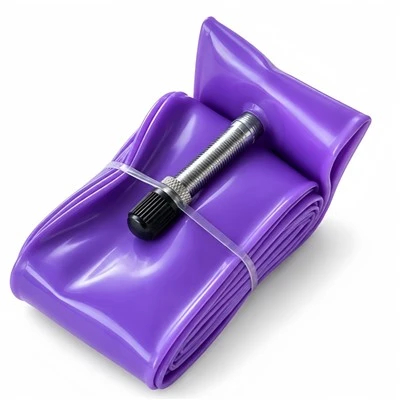
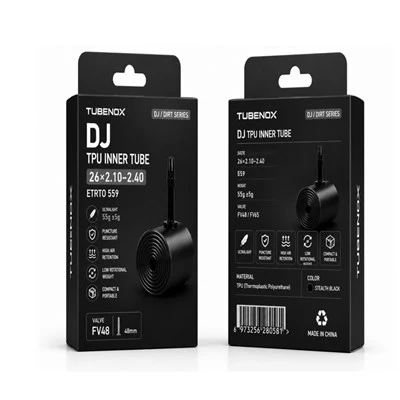
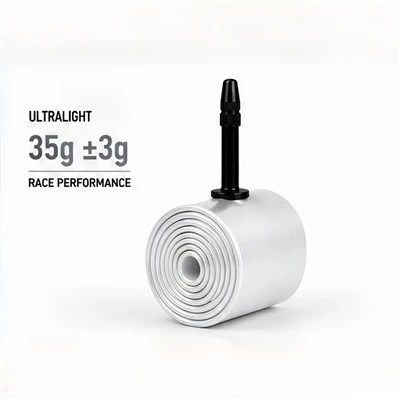
When choosing a TPU bicycle inner tube, most buyers pay attention to weight, tube dimensions, material thickness and valve length. However, there is another detail that deserves just as much attention: how the valve is connected to the TPU tube body.
Unlike a conventional butyl inner tube, a lightweight TPU tube uses a different material structure and manufacturing approach. The area around the valve needs to maintain an airtight connection while dealing with repeated inflation, pressure changes and normal movement inside the tire.
For bicycle brands, importers and distributors, understanding this connection is important when evaluating product quality and selecting a reliable TPU inner tube supplier.
So, how are TPU bicycle inner tube valves connected? What makes a reliable valve joint, and what should buyers check before placing a bulk order?
Let's look at the key considerations.
1. Why Is the Valve Connection So Important?
The valve is more than an inflation point. It is also a connection between two components with different physical properties.
The TPU tube body is flexible and elastic, while the valve assembly may contain metal, plastic or other materials depending on the product design.
This creates several manufacturing challenges.
Material compatibility
The valve base and TPU tube need to form a reliable interface. Different materials may require different surface preparation and joining methods.
Airtightness
The connection must prevent air from escaping around the valve base, even when the tube is inflated to its intended operating pressure.
Mechanical strength
During installation and everyday use, the valve may experience pulling, bending and movement. The connection needs to withstand the forces associated with normal use.
Dimensional consistency
The valve should be correctly positioned and aligned. An uneven connection can affect installation and create unnecessary stress around the valve area.
For these reasons, valve connection quality should be treated as an important part of overall TPU inner tube manufacturing.
2. Common Valve Connection Methods for TPU Inner Tubes
There is no single joining method that applies to every TPU inner tube. The appropriate process depends on the TPU formulation, valve base material, joint design and production equipment.
Three general approaches are worth understanding.
Heat-Based Bonding
Heat-based bonding uses controlled heat and pressure to join compatible thermoplastic materials.
Because TPU is a thermoplastic elastomer, heat can be used to soften the material and create a connection under suitable processing conditions.
Important factors include:
Processing temperature.
- Heating time.
- Applied pressure.
- Contact area.
- Cooling conditions.
- Compatibility between the materials being joined.
When properly developed, a heat-based joining process can create a consistent connection without relying solely on a separate adhesive layer.
However, excessive heat or unsuitable processing conditions can damage the material or create an inconsistent joint.
Adhesive Bonding
Adhesive bonding uses a suitable bonding agent to connect two surfaces.
This approach may be considered when the valve component and TPU tube material cannot be reliably joined using direct thermal bonding alone.
The selection of an adhesive requires careful consideration of:
- Compatibility with TPU.
- Compatibility with the valve base material.
- Adhesion strength.
- Flexibility after curing.
- Resistance to aging and environmental exposure.
- Long-term sealing performance.
Not every adhesive is suitable for TPU. A bonding agent that works with rubber or other plastics should not automatically be assumed to work with a TPU inner tube.
Other Specialized Joining Processes
Some manufacturers may use specially designed valve bases, surface treatments or proprietary joining systems.
The exact construction depends on the product design and manufacturing technology.
For buyers, the important question is not simply whether a manufacturer uses heat or adhesive. It is whether the finished connection can maintain reliable sealing and mechanical integrity under the intended conditions.
3. What Can Cause TPU Inner Tube Valve Connection Failure?
A valve connection can look acceptable from the outside but still have weaknesses that only become apparent during testing or actual use.
Several factors deserve attention.
Inconsistent Bonding Conditions
If processing conditions are not properly controlled, the connection may vary from one production batch to another.
Uneven bonding can create localized weak areas around the valve base.
Poor Material Compatibility
The valve base and TPU material must be compatible with the selected joining process.
An unsuitable material combination may affect adhesion, joint stability or long-term performance.
Excessive Mechanical Stress
The valve area can experience additional stress if the valve is pulled, bent or forced into an incorrect position during installation.
A valve that is not perpendicular to the rim may also indicate that the tube has been twisted or positioned incorrectly.
Excessive Heat During Inflation
Some high-speed electric pumps can generate considerable heat around the valve area.
Recent cycling industry discussions have highlighted the potential for heat to affect certain lightweight TPU valve connections, particularly where different materials meet.
This is why manufacturers should evaluate valve construction and provide appropriate inflation guidance for their specific products.
Installation Damage
A sharp tool, trapped tube material or incorrectly positioned valve can damage the tube near the valve base.
Even a well-manufactured inner tube can fail if it is installed incorrectly.
4. How Do Manufacturers Check Valve Connection Quality?
For TPU inner tube manufacturers, visual inspection alone is not enough.
A reliable quality control program should evaluate the connection from several perspectives.
1. Visual Inspection
Inspect the valve base and surrounding TPU material for:
- Uneven connection areas.
- Visible gaps.
- Wrinkles or deformation.
- Incomplete bonding.
- Surface damage.
The connection should have a consistent appearance according to the approved product specification.
2. Airtightness Testing
Airtightness is one of the most important performance checks.
A practical inspection method involves inflating the tube under defined conditions and checking for air leakage.
Depending on the test procedure, this may include immersion testing or another suitable leak detection method.
Testing conditions should be controlled, including inflation pressure, test duration and temperature.
3. Valve Connection Strength Evaluation
The valve connection should be evaluated for its ability to withstand mechanical stress.
A defined pulling or loading test can help identify weak connections.
The test method, applied force and acceptance criteria should be established according to the product design and customer requirements.
4. Inflation and Air Retention Testing
Finished tubes should be checked for air retention under controlled conditions.
This helps identify potential leakage around the valve area, tube body and other connection points.
It is important to distinguish actual leakage from pressure changes caused by temperature differences or TPU material behavior.
5. Batch Consistency
Testing individual samples is useful, but maintaining consistent quality across production batches is equally important.
Manufacturers should establish inspection procedures and acceptance criteria for the approved product specifications.
5. What Should Buyers Ask Their TPU Inner Tube Supplier?
For bicycle brands and importers, asking a few technical questions can help evaluate a supplier more effectively.
| Question | Why It Matters |
|---|---|
| What type of valve base is used? | Helps identify the connection structure |
| How is the valve attached to the TPU tube? | Clarifies the joining process |
| Is the connection airtight? | Addresses the most important functional requirement |
| How is valve connection strength evaluated? | Helps assess mechanical reliability |
| Is air leakage testing included? | Provides evidence of sealing performance |
| Are inspection criteria consistent between batches? | Helps control bulk order quality |
Buyers should also request product samples and test them with their intended tires and rims.
For OEM projects, it is useful to record the approved valve type, valve length, tube dimensions and connection requirements in the final product specification.
6. Valve Connection Quality and OEM Product Development
For private-label bicycle brands, valve selection and connection design should be considered early in the product development process.
Different projects may require different combinations of:
- Presta or Schrader valves.
- Plastic or metal valve components.
- 40 mm, 45 mm, 65 mm or 85 mm valve lengths.
- Removable or non-removable valve cores.
- Different TPU tube sizes and material specifications.
- Customized product colors and retail packaging.
A change in valve material or design may affect the connection process. Therefore, changing valve specifications after sample approval should involve a new compatibility and quality evaluation.
For distributors, this is especially important when developing several product models with different valve configurations.
7. How TUBENOX Approaches Valve Connection Quality
At TUBENOX, valve connection is treated as an important part of TPU bicycle inner tube quality control.
Our quality control approach considers several aspects of the valve assembly:
- Valve type and specification.
- Valve positioning and alignment.
- Bonding area condition.
- Connection integrity.
- Sealing performance.
These checks form part of a broader quality management process covering material selection, TPU processing, dimensional control, product inspection and finished-product evaluation.
For OEM and private-label customers, valve type, length and product specifications can be discussed during product development.
We recommend confirming the selected configuration through sample evaluation before proceeding with mass production.
Frequently Asked Questions
Q1: Are TPU bicycle inner tube valves heat-welded or glued?
The joining method depends on the tube material, valve base and manufacturing design. Heat-based bonding and adhesive-based joining are different approaches used for compatible material systems. Buyers should confirm the actual process used for their selected product.
Q2: Can a TPU inner tube leak around the valve?
Yes. Leakage can occur if the connection or sealing area is defective, damaged or affected by unsuitable installation conditions. Airtightness testing is an important part of finished-product quality control.
Q3: How can I check whether a TPU valve connection is reliable?
Start with visual inspection, followed by appropriate airtightness and mechanical strength evaluations. Testing should use defined conditions and acceptance criteria.
Q4: Does valve material affect the connection?
Yes. Metal and plastic valve components have different physical properties. Material compatibility and joining process selection should be considered during product development.
Q5: Can I customize the valve for an OEM TPU inner tube?
Yes. Valve type, length, color and certain structural options can be discussed according to the product design and manufacturing requirements.
Q6: Can electric pumps damage TPU inner tubes?
Certain high-speed electric pumps may generate heat around the valve area. Follow the inflation instructions provided for the specific product, and avoid prolonged continuous inflation if the manufacturer advises against it.
Final Thoughts
The valve connection is a relatively small part of a TPU bicycle inner tube, but it plays an important role in product reliability.
A good connection needs more than a clean appearance. Material compatibility, joining conditions, sealing performance and mechanical integrity all deserve attention.
For bicycle brands and wholesale buyers, understanding these details makes it easier to evaluate suppliers, compare samples and establish clear quality requirements before placing bulk orders.
Looking for a reliable TPU bicycle inner tube manufacturing partner?
Contact TUBENOX to discuss your valve specifications, OEM requirements and custom TPU inner tube projects.
SHENZHEN TUBENOX LIMITED
LIGHTER. STRONGER. FURTHER.