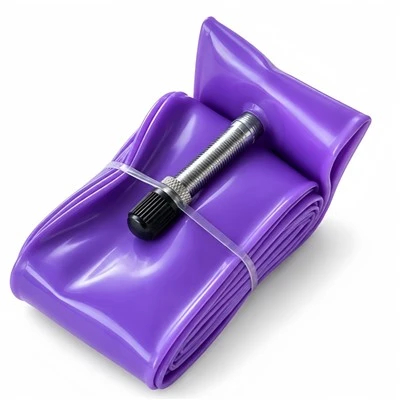
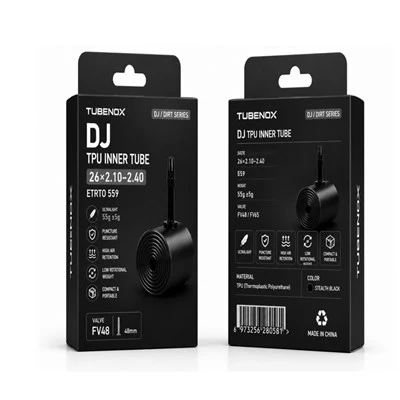
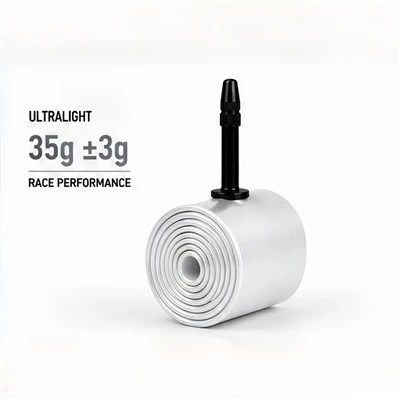
A TPU inner tube may be lightweight and compact, but its valve deserves just as much attention as the tube itself.
For many riders, the first sign of a problem is simple: the tire loses pressure overnight, the pump head is difficult to attach, or air seems to escape around the valve. Sometimes the valve is responsible. In other cases, the problem comes from installation, rim compatibility or an unsuitable valve extension.
These issues are worth understanding before choosing a replacement tube. They also matter to bicycle brands and distributors sourcing TPU inner tubes, where the wrong valve specification can lead to avoidable customer complaints.
Here are some common valve problems, what usually causes them and what to check before ordering or installing a TPU tube.

1. Air Leaking Around the Valve: Where Should You Look First?
When a TPU inner tube loses air, many riders immediately suspect a puncture. But if the leak is close to the valve, there are several other possibilities.
Start with the valve core. On Presta valves with removable cores, the core may not be sufficiently tightened. This is particularly worth checking after installing or removing a valve extension.
The next area to inspect is the valve-to-tube connection. Unlike a conventional butyl tube, a TPU inner tube uses a thin TPU film, and the valve assembly is joined to this material through a dedicated connection process. This area needs to remain properly sealed during use.
Repeatedly pulling, twisting or bending the valve can put unnecessary stress on the connection.
There is also a less obvious possibility: a puncture somewhere else on the tube. Air can travel inside the tire cavity, making the leak appear to come from the valve opening.
A simple way to locate the leak
Remove the tube from the tire and inflate it gently according to the manufacturer's instructions. Apply soapy water to the valve core and accessible connection areas. Small bubbles can help identify where air is escaping.
If the leak comes from the valve-to-TPU connection, do not assume that tightening the valve core will solve it. The source of the leak needs to be identified first.
2. Choosing Between 45 mm, 65 mm and 85 mm Presta Valves
Valve length is one of the easiest specifications to overlook when ordering bicycle inner tubes.
A valve that is too short can make inflation awkward, especially with deep-section carbon rims. A valve that is unnecessarily long may also be inconvenient to handle.
For road and gravel applications, 45 mm, 65 mm and 85 mm are useful options to consider.
| Valve length | Typical application |
|---|---|
| 45 mm | Shallow-profile rims |
| 65 mm | Medium-depth rims |
| 85 mm | Deep-section rims |
These are general guidelines, not fixed rules. Actual compatibility depends on rim depth, valve design and pump-head requirements.
Before selecting a valve, measure the rim depth and check how much of the valve needs to remain accessible outside the rim. The pump head should be able to attach securely without putting excessive sideways pressure on the stem.
For bicycle brands and distributors, offering different valve lengths within the same product range makes it easier to serve riders using different wheelsets.
It is also worth confirming whether the specified length refers to the complete valve assembly or the exposed stem length, as product specifications can vary between manufacturers.
3. Is a Removable Valve Core Worth Having?
A removable Presta valve core is a practical feature, particularly for riders using deep-section wheels.
It makes it possible to replace a damaged core without replacing the entire inner tube. It also allows certain types of valve extensions to be installed.
However, not every Presta valve has a removable core. Buyers should confirm this before ordering rather than assuming that all threaded Presta valves offer the same construction.
There is another detail worth checking: the compatibility of the replacement core and valve body.
A removable core is useful only when the replacement component fits correctly and provides a reliable seal. Poorly matched components or incorrect installation can create another source of air leakage.
For OEM projects, it is better to specify the valve-core construction clearly instead of listing only the valve length.
4. Using Valve Extensions With TPU Inner Tubes
Valve extensions are commonly used with deep-section road wheels, but not every extension works with every valve.
The two main considerations are valve construction and installation method.
Some extensions are designed for valves with removable cores. The original core is removed, the extension is fitted, and the core is installed at the outer end.
Other designs use a different connection arrangement and have their own installation requirements.
This distinction matters. Choosing the wrong extension can make inflation difficult or result in air leakage.
Before using one, check:
- Whether the original valve core is removable.
- Whether the extension matches the valve thread.
- Whether the extension design requires the core to be relocated.
- Whether the completed assembly seals properly.
- Whether the pump head can attach without interference.
If a particular wheelset consistently requires an extension, specifying a suitable longer valve when ordering the inner tube may be a simpler solution.
5. Why the Valve Should Stay Straight During Installation
One installation detail deserves more attention: the position of the valve inside the rim.
When fitting a TPU inner tube, the valve should pass through the rim hole naturally. It should not need to be pulled sideways or forced into position.
Before inflating, check the following:
- The rim tape is correctly positioned.
- There are no sharp edges around the valve hole.
- The tube is not trapped under the tire bead.
- The valve is sitting straight through the rim.
- The retaining nut, if supplied, is not overtightened.
After mounting the tire, inspect the valve again. If it looks noticeably tilted, check the tube position before riding.
This is particularly important with lightweight tubes, where unnecessary stress around the valve connection should be avoided.
6. What Should Importers Check When Sourcing TPU Inner Tubes?
For wholesalers and bicycle brands, valve specifications should be confirmed before production rather than left until the final inspection.
A product description that simply says "Presta valve" does not provide enough information for a consistent OEM order.
A useful specification should include:
Valve length
Confirm the required lengths for each SKU. For example, 45 mm, 65 mm and 85 mm should be listed separately.
Valve core
Confirm whether the core is removable and whether compatible replacement cores are available.
Valve body construction
Check the material, thread arrangement and whether the valve body is fully threaded.
Connection quality
The valve-to-TPU connection deserves particular attention. Ask the manufacturer how this area is inspected and what leak-testing procedures are used.
Wheel compatibility
Test production samples with the intended rim and pump-head combinations, particularly when developing products for deep-section road wheels.
A few clear specifications agreed before production can prevent a considerable amount of confusion later.

7. Valve Inspection: A Small Component That Deserves Its Own QC Process
A TPU inner tube may pass a general appearance inspection while still having a problem with its valve assembly.
For this reason, valve inspection should not be treated as an afterthought.
During incoming sample evaluation and production quality checks, buyers can pay attention to several points:
- Check the valve base for visible bonding defects or irregularities.
- Measure the valve length against the agreed specification.
- Inspect the threads and valve core.
- Check that removable cores can be serviced correctly.
- Carry out leakage checks around the core and valve connection.
- Confirm that the valve sits correctly in the intended rim.
For larger OEM orders, the manufacturer and buyer should agree on inspection methods, test conditions and acceptance criteria in advance.
The goal is not simply to confirm that a tube can hold air when it leaves the factory. It is to make sure that the valve specification is consistent throughout the order.
Frequently Asked Questions
Why does my TPU inner tube lose air overnight?
Possible causes include a puncture, a loose valve core, leakage around the valve connection or normal air permeation. Locate the leak before deciding whether the tube needs replacing.
Can I replace the valve core on a TPU inner tube?
Yes, if the valve is designed with a removable core. Always check the valve specification and use a compatible replacement.
What valve length should I choose for a road bike?
It depends on the rim depth. A 45 mm valve may suit a shallow rim, while 65 mm or 85 mm options may be more appropriate for deeper wheels. Check the actual rim and pump-head requirements before ordering.
Can I use a valve extender with a TPU inner tube?
Yes, provided the extension matches the valve construction and is installed according to the manufacturer's instructions. Removable-core compatibility is particularly important.
Is a fully threaded valve body better?
A fully threaded valve body can provide more flexibility when fitting accessories and retaining hardware, depending on the wheel and valve design. It is a useful specification to consider, but it does not replace the need to check overall compatibility.
Final Thoughts
When choosing a TPU inner tube, it is easy to focus on weight, tire size and material. The valve is a smaller component, but getting it wrong can affect the entire riding experience.
For individual riders, checking valve length and compatibility before installation can prevent unnecessary trouble. For bicycle brands and distributors, confirming valve construction, core design and connection quality before production is equally important.
At TUBENOX, we offer TPU bicycle inner tubes for road, gravel, MTB and BMX applications, with different valve configurations and OEM customization options available.
If you are developing a private-label range or looking for a suitable wholesale specification, contact our team to discuss your requirements.
Explore the TUBENOX TPU bicycle inner tube range at www.tubenox.com.