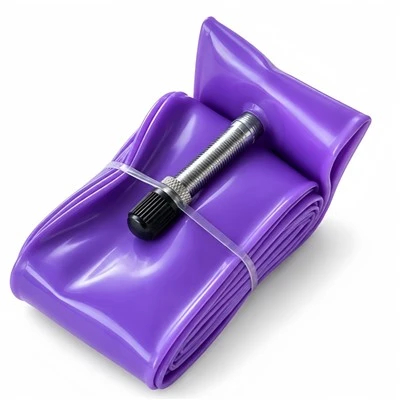
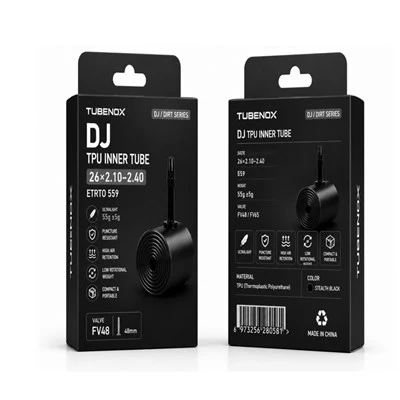
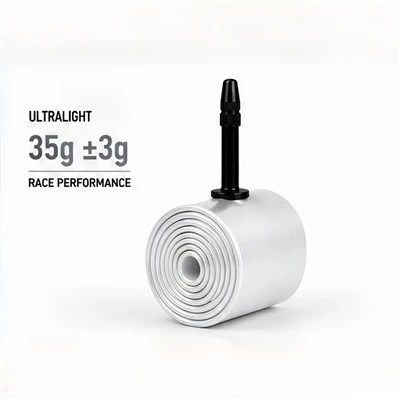
For cyclists looking to improve riding performance, choosing the right inner tube can make a noticeable difference. While traditional butyl tubes remain widely used, latex and TPU (thermoplastic polyurethane) inner tubes have become popular alternatives among road cyclists and performance-oriented riders.
Both materials offer advantages over conventional rubber tubes, but they serve slightly different needs.
Latex inner tubes are known for their flexibility and low rolling resistance. TPU inner tubes, on the other hand, combine low weight, compact storage and better air retention than latex.
So, when comparing TPU vs latex inner tubes, which one makes more sense for modern road and gravel cycling?
The answer depends on how you ride, how much maintenance you are willing to accept and what matters most to you: outright rolling efficiency or everyday practicality.
1. What Is the Difference Between TPU and Latex Inner Tubes?
Although both materials are used in lightweight bicycle inner tubes, their physical properties are quite different.
Latex inner tubes are made from natural rubber. Their high elasticity allows them to deform easily as the tyre rolls over the road surface. This flexibility helps reduce energy loss caused by friction and deformation inside the tyre system.
TPU inner tubes are made from thermoplastic polyurethane, a flexible polymer that combines elastic behaviour with the processing characteristics of thermoplastic materials.
Compared with traditional butyl tubes, TPU models can achieve much lower weight while maintaining practical air retention and compact dimensions.
The difference becomes particularly relevant for road cyclists who want to reduce rotating weight without switching to a tubeless setup.

2. TPU vs Latex: Key Performance Differences
The two materials have different strengths. Neither is automatically better in every riding situation.
Weight
Weight is one of the most obvious differences.
Many lightweight road TPU inner tubes weigh approximately 20–45 grams, depending on the model and construction. Latex road tubes commonly weigh around 50–80 grams.
For cyclists running two inner tubes, this difference can contribute to a meaningful reduction in overall wheel weight.
Lower rotating weight is particularly attractive for climbing, acceleration and riders building lightweight road bikes.
However, weight alone does not determine overall performance. Material flexibility, tyre construction and rolling resistance also matter.
Rolling Resistance
This is where latex has traditionally held an advantage.
Latex is highly elastic and can deform with relatively little energy loss as the tyre rotates. As a result, high-quality latex tubes often achieve excellent rolling resistance.
TPU has made considerable progress in this area. Some modern TPU models now deliver results surprisingly close to latex.
In a January 2026 update, Bicycle Rolling Resistance compared multiple TPU products with latex and butyl tubes using three road tyres.
At 80 psi, the tested Vittoria latex tube recorded 10.8 watts of rolling resistance. Several TPU models recorded approximately 10.9–11.2 watts under the same test conditions.
The results show that selected TPU products can approach latex performance, although differences remain between individual models.
For buyers, this is an important point: not all TPU inner tubes perform identically. Material formulation, wall thickness and manufacturing quality all influence the final result.
Air Retention
Air retention is one of the strongest practical advantages of TPU.
Latex is relatively porous, allowing air to escape more quickly than through TPU or butyl materials. Riders using latex tubes generally need to check and replenish tyre pressure before each ride.
TPU inner tubes offer a more convenient balance. They typically retain air considerably better than latex, reducing the need for frequent inflation.
For commuters, regular training and long-distance cycling, this can make everyday maintenance much easier.
Durability and Installation
Latex tubes are flexible but require careful handling. Incorrect installation, pinching between the tyre and rim, or incompatible repair products can create problems.
TPU tubes also require proper installation. Their lightweight construction does not mean they can be handled carelessly.
One important precaution is to avoid excessive inflation when a TPU tube is outside the tyre. Always follow the manufacturer's installation instructions.
Neither material should be judged solely by its advertised puncture resistance. Actual performance depends on wall thickness, tube construction, tyre protection and manufacturing consistency.
3. TPU vs Latex Inner Tubes: Comparison Table
| Performance Factor | TPU Inner Tube | Latex Inner Tube |
|---|---|---|
| Weight | Very lightweight | Lightweight |
| Rolling resistance | Low; varies by model | Generally excellent |
| Air retention | Good | Relatively poor |
| Flexibility | High | Very high |
| Compact storage | Excellent | Good |
| Inflation frequency | Less frequent | Usually before every ride |
| Installation | Requires care | Requires care |
| Maintenance | Relatively convenient | More demanding |
| Best application | Road, Gravel and performance cycling | Performance-focused road cycling |
The table represents general material characteristics rather than guaranteed specifications for every product.
4. Which Is Better for Road Cycling?
For competitive road cyclists, both options deserve consideration.
Latex remains attractive for riders who prioritise rolling efficiency and do not mind checking tyre pressure before every ride.
TPU is a strong alternative for riders who want to reduce wheel weight while keeping maintenance relatively simple.
It is particularly useful for climbing-focused bikes, lightweight wheelsets and riders who prefer carrying a compact spare tube.
For everyday training, the ability to retain air more effectively can be more valuable than a very small difference in laboratory rolling resistance.
In other words, a tube that performs consistently and requires less attention may be the better choice for many cyclists.
5. Is TPU a Better Choice for Gravel Bikes?
Gravel riding introduces different requirements.
Compared with road cycling, gravel tyres are generally wider and operate at lower pressures. Riders also encounter rough surfaces, sharp stones and changing terrain.
Latex can provide excellent flexibility, but its faster air loss may be inconvenient on long rides where access to a pump is limited.
TPU offers several practical advantages:
- Lightweight construction helps reduce the weight carried on long rides.
- Compact folded dimensions make it convenient as an emergency spare.
- Better air retention than latex reduces routine pressure adjustments.
- Different sizes can be developed for wider gravel tyre applications.
However, tyre width, pressure, rim compatibility and tube specifications must always be checked before installation.
A road-specific TPU tube should not automatically be used in a wider gravel tyre simply because its material is suitable.

6. What Should Bicycle Brands Consider When Sourcing TPU Inner Tubes?
For bicycle brands, distributors and importers, the comparison between TPU and latex is also a product development question.
A competitive TPU inner tube requires more than a low advertised weight.
Important factors include:
- Material consistency: TPU film should maintain consistent thickness and physical properties throughout production.
- Valve bonding quality: The connection between the valve assembly and TPU body needs reliable manufacturing control.
- Air retention: Products should undergo appropriate air-leakage and pressure performance checks.
- Dimensional accuracy: Tube dimensions must match the intended tyre size and application.
- Product positioning: Different constructions may be required for lightweight road racing, wider gravel tyres and MTB applications.
For private-label brands, these details influence product reliability, customer satisfaction and long-term market positioning.
7. Final Verdict: TPU or Latex?
Latex remains an excellent choice for cyclists who want very low rolling resistance and are comfortable with more frequent maintenance.
TPU is a more balanced option for riders who value low weight, compact storage and practical air retention.
It is not necessary to choose one material for every riding situation. The best option depends on the rider's priorities and the specific construction of the inner tube.
For many modern road and gravel cyclists, TPU offers an attractive combination of performance and convenience.
As material technology continues to develop, the gap between high-performance TPU and latex is becoming increasingly interesting.
Looking for a reliable TPU bicycle inner tube manufacturer?
TUBENOX develops TPU inner tubes for Road, Gravel, MTB and BMX applications, supporting bicycle brands, wholesalers and distributors with OEM and custom product options.
From tube dimensions and valve configurations to packaging requirements, we work with customers to develop specifications suited to their target markets.
Contact TUBENOX to discuss your next TPU inner tube project.
Website: https://www.tubenox.com/
Frequently Asked Questions
Q1: Are TPU inner tubes faster than latex inner tubes?
Not necessarily. Latex generally offers excellent rolling resistance, while some high-performance TPU models now come very close. Actual results depend on the specific tube and tyre combination.
Q2: Do TPU inner tubes hold air better than latex?
Yes. TPU generally has better air retention than latex, making it more convenient for regular cycling.
Q3: Are TPU inner tubes lighter than latex?
Many lightweight road TPU tubes weigh approximately 20–45 grams, while latex models commonly weigh around 50–80 grams. Actual weight depends on size and construction.
Q4: Can TPU inner tubes be used for gravel bikes?
Yes, provided the tube is specifically designed for the tyre dimensions and compatible with the wheel system.
Q5: Is TPU worth the higher purchase price?
For riders who value weight savings, compact storage and reduced maintenance, TPU can offer good value. Latex may remain attractive for riders who prioritise rolling efficiency above convenience.