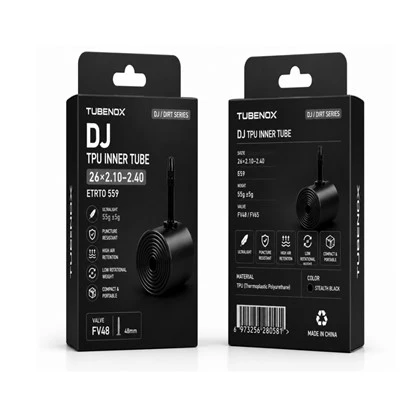
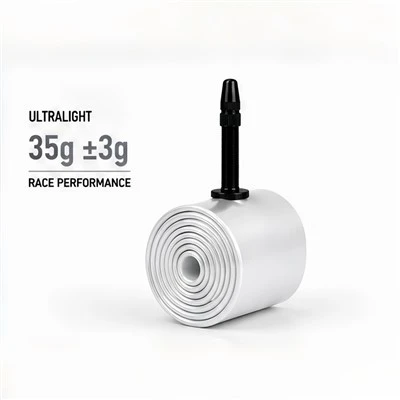
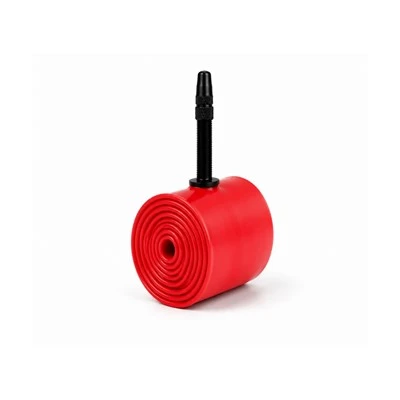
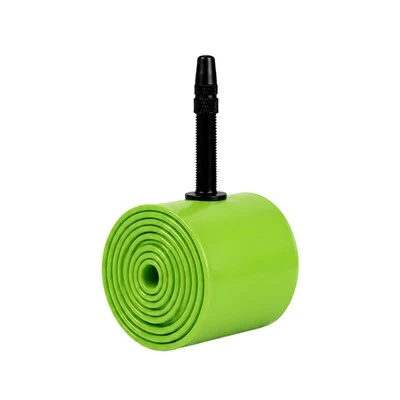
TPU bicycle inner tubes may look simple when rolled into a small retail box, but producing a reliable tube requires much more than making a thin ring of plastic. Material condition, wall consistency, joint strength, valve attachment and leak control all affect how the finished tube performs inside a tire.
For bicycle brands and distributors, understanding the TPU inner tube production process makes supplier comparisons more meaningful. A low unit price says little about batch consistency, valve reliability or how a factory controls the points most likely to cause a field complaint.
This guide explains the main stages of TPU bicycle tube manufacturing and the questions an OEM buyer should ask before approving a sample or placing a production order.

Why Manufacturing Control Matters More with a Lightweight Tube
A TPU tube uses far less material than a conventional butyl tube of a comparable size. That is one reason it can offer a compact packed volume and a much lower weight. It also means that small production variations become more important.
An uneven section that might be less noticeable in a thick rubber tube can become a weak point in a lightweight TPU construction. The same applies to an incomplete joint, a poorly prepared valve area or contamination trapped during processing. The target is not simply "as thin as possible," but a repeatable balance among weight, elasticity, air retention and durability for a defined tire range.
The TPU Inner Tube Production Process at a Glance
The exact equipment and joining method can vary by tube design and factory. However, a typical production route includes the following stages:
- TPU resin selection and incoming material control
- Drying and preparation of the raw material
- Extrusion or forming of the tube body
- Wall-thickness and dimensional control
- Tube joining or seam formation
- Valve preparation and assembly
- Trimming, conditioning and surface inspection
- Inflation, leak and pressure-retention checks
- Final size, weight and workmanship inspection
- Rolling, labeling and OEM packaging
1. Selecting the Right TPU Material
TPU is a family of thermoplastic polyurethane materials rather than one universal formula. Grades can differ in hardness, elasticity, tear behavior, hydrolysis resistance, processing window, color and compatibility with extrusion, molding or welding methods.
For bicycle inner tubes, the material must be capable of forming a thin, flexible and airtight structure while tolerating repeated deformation inside the tire. The correct grade also needs to work with the planned valve connection and production method.
An OEM supplier should control more than the material name on a purchasing document. Incoming resin checks may include supplier identification, batch information, appearance, packaging condition and confirmation that the material matches the approved specification. Color masterbatch or functional additives must also be compatible with the selected TPU.
Material substitutions should be controlled because a change can alter processing stability, joint strength, air retention or flexibility. An approved bill of materials helps keep repeat orders aligned with the original sample.
2. Drying and Preparing the Resin
TPU is hygroscopic, which means the granules can absorb moisture from the surrounding air. For this reason, resin storage and pre-drying are critical parts of the manufacturing process.
If moist material enters the processing equipment, the finished surface may show bubbles, streaks or other defects. Moisture can also make the melt less stable and reduce the consistency of thin sections. The required drying temperature, time and target moisture level depend on the TPU grade and the material supplier's processing instructions.
After drying, the resin should be protected from unnecessary exposure before it reaches the machine. Open bags, uncovered hoppers and poorly controlled workshop humidity can undo part of the preparation work.
This stage is rarely visible in a product photo, but it is one of the clearest signs that a TPU inner tube factory understands the material rather than simply processing it like a general-purpose plastic.
3. Forming the TPU Tube Body
Depending on the construction, TPU tube bodies can be produced through extrusion, blow-forming or another controlled thermoplastic process. A common objective is to create a continuous thin-walled profile that can later be formed into the required tube shape.
The dimensions are not chosen only by wheel diameter. Tire width, intended inflation range, target product weight and installation margin also influence the construction. A 700×18–28C road tube and a 29×2.4–2.8 MTB tube should not simply be scaled versions of the same profile.
That is why a serious OEM project starts with a clear model specification. Tire size, ETRTO range, valve type, valve length, target weight and expected use should be confirmed before the production tooling and process settings are finalized.
4. Controlling Wall Thickness and Dimensions
Wall uniformity is one of the most important variables in lightweight bicycle tube manufacturing. If one area is too thin, it may be more vulnerable during installation or inflation. If another area is unnecessarily thick, weight and packed size increase without a clear performance benefit.
Manufacturers may use in-process measurements, sample cutting, weight comparison and dimensional checks to monitor consistency. The suitable method depends on the production setup and the approved inspection plan.
Buyers should look beyond a single sample weight. Two tubes can show the same total weight while distributing material differently around the circumference. Stable process control is therefore more valuable than hitting an attractive number on one hand-selected sample.
For mass production, the specification should define a realistic tolerance that is strict enough to detect a meaningful process shift.
5. Creating a Strong, Consistent Joint
The tube body must be closed into a continuous air chamber. Depending on the design, this may involve thermal welding or another joining technology developed for the specific TPU construction.
The joint area requires careful control of surface condition, alignment, heat, pressure and processing time. Too little energy can result in incomplete bonding. Too much can deform or weaken the surrounding thin material. Contamination, wrinkles or uneven overlap may also create hidden leak paths.
A visually neat joint is helpful, but appearance alone is not enough. The connection should remain airtight and mechanically stable when the tube expands inside the tire. Process settings should be documented, and joint quality should be checked during production rather than only after the entire order is finished.
Not every factory uses the same joining method. What matters is whether it suits the approved material and can be repeated across production batches.
6. Preparing and Attaching the Valve
The valve area is one of the most technically sensitive parts of a TPU inner tube. It connects a relatively rigid component to a thin, highly flexible tube body, and it must remain airtight through installation, inflation, riding and storage.
Valve assembly can include preparing the valve base, positioning it accurately, bonding or welding it to the tube, and checking the transition between the valve and surrounding TPU. The valve base should sit flat without sharp edges or excessive stiffness that could concentrate stress.
The correct valve specification also depends on the market and wheel setup. TUBENOX models can be developed with Presta valve options such as 45, 48, 65 or 85 mm, depending on the tube model, while selected BMX applications may use a 45 mm Schrader valve. Deep-section road rims generally require a longer exposed valve than shallow rims.
For OEM orders, valve material, color, removable or fixed core design, cap style and branding details should be confirmed during sample development. Any valve change should be evaluated as a functional change, not only a cosmetic one.
7. Trimming, Conditioning and Workmanship Inspection
After the main forming and assembly operations, the tube is trimmed and checked for visible defects. Inspectors look for irregular edges, surface contamination, creases, bubbles, poor joints, valve misalignment and damage caused during handling.
Workmanship standards should be supported by approved samples or defect photographs. Descriptions such as "good appearance" are too subjective when several inspectors or production lines are involved. Clear acceptance criteria help the factory separate a harmless visual variation from a defect that may affect function.
8. Leak Testing and Pressure-Retention Checks
Leak control is one of the most important parts of TPU tube quality control. Testing may include controlled inflation, observation over a defined period, pressure-loss comparison, water testing at selected stages or equipment-based leak detection. The inspection method and sampling level should match the product, order size and buyer requirements.
The valve connection and tube joint deserve particular attention because they are common risk points in any multi-part air chamber. However, the entire tube body must also be checked for pinholes or damage.
An immediate inflation check and a longer pressure-retention check answer different questions. A tube may appear normal directly after inflation but still lose air slowly. For this reason, an OEM quality plan should define the test pressure, holding time, acceptable pressure change and action to take when a failure is found.
Random inspection alone is not a substitute for stable production. Leak-test results should also be used as process feedback. If failures begin to cluster at the valve or joint, production should be reviewed before more units are packed.
9. Final Size, Weight and Functional Inspection
Before packaging, finished tubes can be checked against the approved product specification. Typical inspection items include:
- Compatible tire and ETRTO range
- Tube circumference and key dimensions
- Finished weight and tolerance
- Valve type, length and alignment
- Surface and joint workmanship
- Inflation and pressure retention
- Logo, label and color accuracy
- Packaging quantity and barcode information
For a multi-model order, separation and identification are especially important. A 65 mm and an 85 mm Presta valve tube may look similar after rolling, while serving different rim depths. Model codes, inner labels and carton marks help prevent warehouse and customer-service problems later.
Golden samples should be retained for repeat orders. They provide a physical reference when color, rolling method, valve appearance or packaging layout cannot be described fully by a spreadsheet.
10. Rolling and OEM Packaging
TPU tubes are valued partly because they pack into a small volume. The final rolling method should protect the valve area and avoid sharp folds or unnecessary stress in the tube body.

OEM packaging can include a custom retail box, e-commerce packaging or bulk packing. Before production, the buyer should confirm box dimensions, artwork, barcode, language, warnings, installation instructions, model identification and carton quantity.
Packaging is also part of quality control. A correctly made tube can still create complaints if the box lists the wrong tire size or valve length. For private-label projects, TUBENOX reviews product and packaging information together so that the physical tube, label and outer carton use the same model data.
What OEM Buyers Should Check Before Approving a Supplier
Factory discussions are more productive when buyers ask process-based questions rather than requesting a generic claim that the product is "high quality." Useful questions include:
- Which TPU grade is approved for this model, and how is material substitution controlled?
- How is the resin dried and protected before processing?
- How are wall consistency and finished weight monitored?
- Which joining method is used for the tube body?
- How is the valve connection inspected?
- What leak or pressure-retention test is performed?
- Which tolerances will appear on the signed specification?
- How are production batches and packaging versions identified?
- Is a pre-production sample approved before mass production?
- What happens when inspection finds a repeated defect?
The answers do not need to reveal confidential settings. They should show that the supplier has a defined process, measurable standards and a way to trace problems.
TUBENOX OEM and Private-Label Development
TUBENOX develops TPU inner tube solutions for bicycle brands, distributors, wholesalers and retailers. The available range covers road, gravel, MTB and BMX applications, with model-specific tire ranges, valve options and target weights.
An OEM project normally begins with the intended market and wheel setup. From there, the product specification can define tube size, valve type and length, color, weight tolerance, logo method, retail box and shipping carton. Samples are used to confirm fit, inflation behavior, appearance and packaging before the production order.
For buyers building a complete product line, consistency across models is just as important as the performance of one tube. Shared packaging rules, model naming and inspection records can make future reorders easier to manage while reducing the risk of mixed specifications.
Frequently Asked Questions
1. Are all TPU inner tubes made with the same process?
No. The forming, joining and valve-attachment methods can vary by manufacturer and tube design. Buyers should evaluate the complete process and production consistency instead of comparing one technical term in isolation.
2. Why must TPU resin be dried before production?
TPU granules absorb moisture from the air. Excess moisture can create bubbles, streaks and unstable processing, especially in thin-walled products. Drying conditions should follow the requirements of the selected material grade.
3. What is the most critical area of a TPU bicycle tube?
The valve connection and tube joint require close attention, but wall consistency across the full tube is equally important. A reliable product depends on all three areas working together.
4. How are TPU inner tubes checked for leaks?
Factories may use controlled inflation, holding tests, water testing or equipment-based detection. The approved quality plan should state the method, pressure, duration, sampling level and acceptance criteria.
5. Can one TPU tube construction be used for every tire width?
No. Road, gravel, MTB and BMX tires place different demands on tube dimensions, expansion and material distribution. Each model should be developed for a defined tire or ETRTO range.
6. Which valve lengths are available for OEM projects?
Valve options depend on the tube model. TUBENOX can support Presta valve lengths such as 45, 48, 65 and 85 mm for selected models, as well as a 45 mm Schrader option for certain BMX applications.
7. Can the tube color, logo and packaging be customized?
Yes. Color, branding, retail box design and carton information can be developed for private-label orders, subject to the selected material, production feasibility and order quantity.
8. Should a brand approve samples before mass production?
Yes. A signed sample and specification give both parties a clear reference for the product, valve, weight tolerance, appearance and packaging. Any change after approval should be documented before production begins.
Build a More Reliable TPU Inner Tube Program
The best TPU inner tube is not defined by weight alone. It is the result of suitable material, controlled processing, secure valve assembly, repeatable leak testing and accurate model identification.
If you are developing a road, gravel, MTB or BMX tube range, TUBENOX can help review the required sizes, valves, target weights and private-label packaging. Contact us with your product list or target market to discuss samples and an OEM production plan.
Contact TUBENOX for OEM TPU inner tube development, wholesale pricing and private-label packaging.