Choosing an inner tube manufacturer is rarely just a price comparison. For a bicycle brand, the supplier must produce the correct specifications, maintain consistent quality and deliver a product that is ready for retail.
This becomes even more important with TPU inner tubes. Small differences in film thickness, valve construction, welding and inspection can affect installation, air retention and long-term reliability. A good sample is only the beginning-the real question is whether the manufacturer can repeat that result across an entire production order.

1. A Product Range That Matches the Brand's Market
Most bicycle brands do not sell a single universal tube. Their range may cover several wheel diameters, tire widths and riding categories.
A capable bicycle inner tube manufacturer should understand the differences between:
- Road racing and endurance cycling
- Gravel and all-road riding
- Cross-country, trail and enduro MTB
- BMX racing, street and dirt jump
- Youth and junior bicycle sizes
- Replacement and emergency spare tubes
The manufacturer should be able to confirm the actual compatibility of each tube rather than relying only on a general wheel-size description.
For example, two products may both be described as 20-inch tubes while using different rim diameters, such as 406 and 451. Likewise, a 700C TPU tube made for narrow road tires should not automatically be treated as suitable for wider gravel tires.
Clear size matching helps prevent incorrect listings, customer complaints and unnecessary returns.
2. Accurate Specifications
Professional buyers normally review more than the size printed on the packaging. They want a complete and consistent specification sheet.
Important details include:
- Nominal tire size
- ETRTO rim diameter
- Compatible tire-width range
- Tube weight and tolerance
- Valve type
- Valve length
- Valve material and construction
- Recommended application
- Maximum inflation restrictions outside the tire
- Packaging dimensions
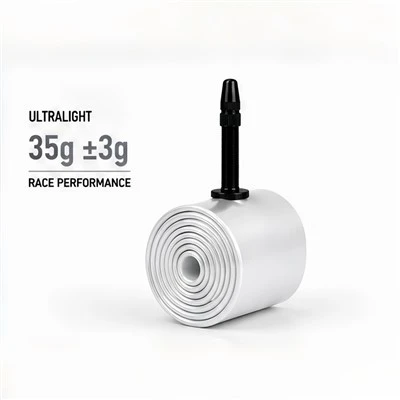
Weight tolerance deserves particular attention. If a tube is marketed as an ultralight model, a large variation between samples and production units can create problems for both marketing and quality control.
Specifications should also remain consistent across quotations, samples, packaging artwork and final production. A mismatch between the product, retail box and barcode label can quickly turn into an expensive correction.
3. Consistent TPU Material and Construction
A finished TPU inner tube may look simple, but several production details influence its performance.
Bicycle brands should ask how the supplier controls:
- TPU film thickness
- Material uniformity
- Welded seam quality
- Valve-to-tube bonding
- Valve alignment
- Surface defects
- Finished weight
- Dimensional consistency
The lightest tube is not automatically the right tube for every application. A race-oriented road tube may prioritize minimum weight, while a wider MTB or dirt-jump model may need a more substantial construction.
A good manufacturer should be able to explain these differences and recommend a suitable structure for the intended use. If every product is presented with the same performance claims, regardless of tire width or riding conditions, the range probably has not been developed carefully enough.

4. Reliable Valve Construction
The valve area is one of the first places buyers inspect during sample testing. Problems around the valve base can cause slow leaks, separation or installation difficulties.
Brands should confirm:
- Presta or Schrader valve compatibility
- Available valve lengths
- Valve-core configuration
- Valve-stem material
- Bonding method
- Valve straightness
- Air-leak testing around the base
For road and gravel tubes, common Presta valve options may include shorter valves for standard rims and longer valves for deeper aerodynamic rims. MTB and BMX projects may have different requirements depending on wheel construction and target market.
Valve length should be selected against the actual rim depth-not simply copied from a competing product.
5. A Clear Quality-Control Process
A factory inspection report is useful, but buyers also need to understand what is checked during normal production.
A practical quality-control process may include:
- Incoming material inspection
- Dimensional and weight checks
- Seam inspection
- Valve-position inspection
- Inflation testing
- Air-retention testing
- Visual inspection
- Packaging and barcode verification
- Random inspection before shipment
The buyer should also ask how failed units are recorded and separated from acceptable products.
For a first order, both sides should agree on the inspection criteria before production begins. This is more effective than discussing acceptable quality only after a problem appears.
6. Samples That Represent Production
Samples allow a bicycle brand to check fit, installation, weight, valve operation and packaging before placing a larger order.
However, samples are only useful when they represent the construction planned for mass production.
Before testing, the buyer should confirm:
- Whether the sample is a standard model or custom build
- Its actual weight and tolerance
- Material and wall construction
- Tire-size compatibility
- Valve specification
- Whether later production will use the same materials and process
A practical sample evaluation should include installation on several compatible rims and tires. It should not be limited to inflating the tube on a workbench.
For TPU products, installation instructions should also be provided. Incorrect inflation outside the tire can permanently deform some TPU tubes and lead to misleading test results.
7. OEM and Private-Label Capability
For a bicycle brand, the product is only part of the project. It also needs to arrive under the correct brand identity and in a format suitable for sale.
An OEM inner tube manufacturer should be able to support:
- Logo printing
- Custom tube colors where practical
- Valve-length selection
- Custom size combinations
- Individual labels
- Branded retail boxes
- E-commerce packaging
- Bulk packaging
- Barcodes and model codes
- Installation instructions
- Multi-language packaging
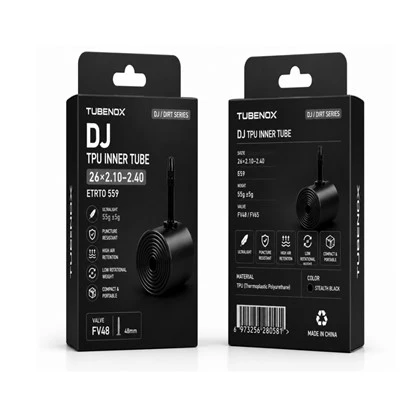
Packaging artwork should be checked against the final product specification. Tire size, ETRTO, valve type and tube weight must match the item inside the box.
Private-label buyers should also confirm who prepares the artwork, what file format is required and whether a physical packaging sample can be approved before mass printing.
8. Realistic MOQ Requirements
MOQ is important, especially for a new brand testing several models. But a low total MOQ does not always mean every customization is available in small quantities.
Different minimums may apply to:
- Standard tubes
- Custom colors
- Printed logos
- Individual size specifications
- Retail boxes
- Packaging inserts
- Barcodes and labels
A supplier should explain these minimums separately. For example, a standard tube with a custom label may require a lower quantity than a completely new tube specification with custom-colored material and printed retail packaging.
For a new product launch, it is often more practical to begin with a limited number of proven specifications. Sales data from the first order can then guide the next expansion.
9. Support During Product Development
Not every buyer arrives with a complete technical file. Some have a target tire size and weight, while others begin with a competitor sample or a packaging concept.
A useful manufacturing partner should be able to turn this information into a clear production specification.
The development process normally includes:
- Confirming the application and target market
- Selecting compatible sizes and valves
- Reviewing weight and durability requirements
- Preparing samples
- Conducting fit and performance checks
- Confirming packaging artwork
- Approving the final production specification
This stage is where experienced technical communication matters. A supplier should identify unclear or incompatible requirements before production, not simply copy them into a quotation.

10. Production Capacity and Delivery Control
A competitive quotation has little value if the supplier cannot meet the agreed schedule.
Brands should ask about:
- Sample lead time
- Production lead time
- Monthly capacity
- Peak-season scheduling
- Material availability
- Packaging production time
- Pre-shipment inspection
- Export carton configuration
- Shipping documentation
Custom packaging can sometimes take longer than the tube production itself. Both timelines should therefore be confirmed separately.
It is also worth asking how repeat orders are controlled. Model codes, approved samples, packaging files and inspection standards should be kept on record so that later orders remain consistent.
11. Communication That Prevents Mistakes
Many manufacturing problems begin with incomplete communication rather than defective machinery.
Before confirming an order, the supplier and buyer should have the same understanding of:
- Product model
- Size range
- ETRTO
- Valve type and length
- Weight tolerance
- Product color
- Logo position
- Packaging
- Quantity breakdown
- Barcode assignment
- Inspection standard
- Delivery date
A strong supplier will summarize these details in a specification sheet or order confirmation. That gives both sides a reference point when samples, packaging and production are checked.
Fast replies are useful, but accurate replies are more important.
12. Commercial Terms That Support Growth
Bicycle brands also consider whether a manufacturer can support the project after the first shipment.
This may include:
- Mixed-model orders
- Repeat-order consistency
- Replacement support
- Packaging updates
- New size development
- Market-specific labeling
- Documentation for distributors
- Stable quotations and lead times
The best manufacturing relationship is not necessarily the one with the lowest first-order price. It is the one that reduces errors, keeps product quality stable and makes repeat ordering straightforward.

Questions to Ask an Inner Tube Manufacturer
Before selecting a supplier, bicycle brands can use the following checklist:
- Which road, gravel, MTB and BMX sizes do you currently produce?
- What are the exact weight tolerances for each model?
- Which Presta and Schrader valve options are available?
- How do you test the welded seams and valve connection?
- Is every tube checked for leakage before packing?
- Can production match the approved sample?
- What is the MOQ for standard and customized models?
- Can you provide private-label retail packaging?
- What is the sample and production lead time?
- How are product specifications controlled for repeat orders?
- Can different sizes be combined in one shipment?
- What happens if inspection finds units outside the agreed standard?
- Clear answers to these questions reveal much more than a price list.
Choosing the Right Bicycle Inner Tube Manufacturer
A dependable inner tube supplier should understand both the product and the commercial side of a bicycle brand. Accurate sizing, stable TPU construction, reliable valves and consistent inspection protect the product itself. Flexible OEM services, sensible MOQ requirements and clear communication help the brand bring it to market.
The decision should therefore be based on repeatable production-not on a perfect sample or a low quotation alone.
Work With TUBENOX
TUBENOX supplies TPU bicycle inner tubes for road, gravel, MTB and BMX applications, with support for custom specifications, private-label branding and retail packaging.

Send us your required tire sizes, valve lengths, target weights and estimated quantities. We will review the project and recommend suitable models for sampling and OEM production.