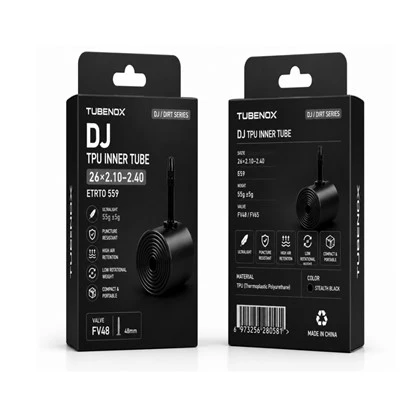
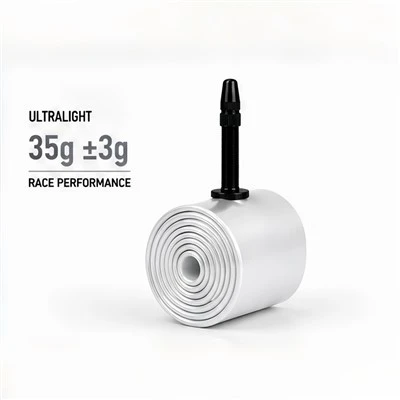
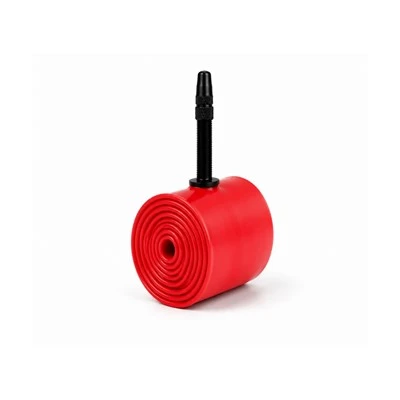
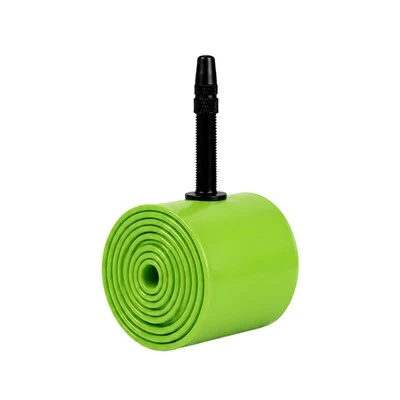
If you've spent any time researching bicycle upgrades recently, you've probably come across TPU inner tubes.
They're lighter.
They're smaller.
They're often marketed as a performance upgrade.
And they're usually more expensive than traditional butyl tubes.
Which leads to a simple question:
Are TPU tubes actually worth the money?
The answer depends on what you expect from your equipment.
For some cyclists, switching to TPU is one of the easiest upgrades they'll ever make.
For others, the benefits may not justify the additional cost.
Let's look at what riders gain-and what they don't-when moving from traditional tubes to TPU.
The First Reaction Most Riders Have
Most cyclists notice the same thing the first time they pick up a TPU tube.
It's not the weight listed on the package.
It's how unbelievably small it feels.
If you're used to carrying a standard spare tube in a saddle bag, the difference is immediately obvious.
A TPU tube can often fit in places where a butyl tube simply won't.
That might sound like a minor detail, but for:
- Gravel riders
- Bikepackers
- Racers
- Long-distance cyclists
- space matters.
Many riders end up appreciating the compact size even more than the weight savings.
What Are You Actually Paying For?
When comparing prices, TPU tubes are usually more expensive than butyl tubes.
That's unavoidable.
The material itself is more advanced, and the manufacturing process is more demanding.
However, the extra cost isn't simply paying for a different material.
You're paying for several advantages at the same time:
Reduced weight
Smaller pack size
Improved efficiency
Modern manufacturing technology
Performance-oriented design
Whether those benefits matter depends entirely on your riding style.
Weight Savings: The Most Obvious Benefit
Let's start with the feature that gets the most attention.
Weight.
A standard butyl road tube may weigh around 100 grams.
A TPU alternative may weigh as little as 30 to 40 grams.
Across two wheels, that's often a reduction of well over 100 grams.
Will you suddenly become faster?
No.
Cycling performance doesn't work that way.
But reducing rotating weight is one of the most effective ways to improve how a bike feels during:
Accelerations
Climbs
Repeated speed changes
Many riders describe the result as a bike that feels more responsive and eager to move.
It's not dramatic.
It's simply noticeable.
The Benefit Nobody Talks About Enough
Most reviews focus on weight.
Personally, I think packability is the bigger advantage.
Imagine you're preparing for:
A gravel race
A bikepacking trip
A century ride
A mountain bike adventure
Every item you carry competes for limited space.
A TPU tube occupies remarkably little room compared to a traditional tube.
For many cyclists, that's a daily benefit they experience far more often than any performance gain.
You don't have to be a racer to appreciate having extra storage space.

What About Ride Quality?
This is where discussions often become subjective.
Some riders report noticeable improvements.
Others say they feel very little difference.
The reality is that ride quality depends on far more than the inner tube.
Factors such as:
Tire construction
Tire pressure
Wheel design
Rider weight
Surface conditions
often have a larger impact.
That said, many cyclists do describe TPU-equipped bikes as feeling slightly more responsive, particularly during hard efforts and climbing.
The effect isn't revolutionary, but it's there.
Are TPU Tubes Durable Enough?
This concern comes up frequently.
After all, a lighter product often raises questions about durability.
Modern TPU tubes have improved significantly compared to early versions.
Advances in material technology and manufacturing have made today's products much more reliable.
Many riders now use TPU tubes for:
Daily commuting
Road training
Gravel riding
Cross-country mountain biking
without giving them much thought.
Like any inner tube, proper installation matters.
Most tube failures are caused by:
- Pinched tubes
- Incorrect sizing
- Tire damage
- Installation mistakes
rather than the tube material itself.
When TPU Makes the Most Sense
There are certain situations where TPU tubes are especially easy to recommend.
Road Cycling
Road riders often chase efficiency.
The lower weight and compact design fit perfectly with that goal.
Gravel Riding
Gravel cyclists typically carry tools, nutrition, and spare equipment.
A smaller spare tube is a genuine advantage.
Bikepacking
Space savings become incredibly valuable during multi-day trips.
Many bikepackers choose TPU simply because it frees up room for other essentials.
Competitive Cycling
Any discipline where riders care about weight can benefit from TPU technology.
When TPU Might Not Be Necessary
TPU isn't automatically the best option for everyone.
If your bike is primarily used for:
- Casual neighborhood rides
- Occasional commuting
- Short recreational trips
then a standard butyl tube may already meet your needs.
That's not a criticism of TPU.
It's simply a reminder that upgrades should match the rider.
Not every cyclist needs the lightest component available.
The Hidden Value for Modern Cyclists
One reason TPU tubes continue gaining popularity is that they solve multiple problems simultaneously.
Most cycling upgrades focus on a single benefit.
A lighter wheelset reduces weight.
A faster tire improves rolling efficiency.
A more aerodynamic helmet improves airflow.
TPU tubes improve several areas at once:
- Weight
- Storage
- Convenience
- Portability
That's unusual.
And it's one reason many riders consider them a surprisingly good value despite the higher purchase price.
Why More Cycling Brands Are Investing in TPU
The growth of TPU isn't limited to consumers.
Manufacturers, distributors, and cycling brands are increasingly entering the category as demand continues to rise.
Consumers are actively searching for:
- Lightweight bike tubes
- Compact spare tubes
- Performance-focused cycling accessories
- Modern alternatives to traditional butyl products
- This trend has created opportunities for:
- Private-label TPU tubes
- OEM bicycle tube manufacturing
- Custom-colored tube programs
- Branded cycling accessories
As the market expands, TPU products are becoming a standard offering rather than a niche upgrade.
So, Are TPU Tubes Worth It?
For many cyclists, yes.
Not because they dramatically transform performance.
Not because they guarantee higher speeds.
And not because they solve every cycling problem.
They're worth it because they improve several aspects of the riding experience at the same time.
You carry less weight.
You save storage space.
You gain a more modern and efficient setup.
For riders who spend serious time on the bike, those small improvements add up.
Final Thoughts
The best cycling upgrades are often the ones you stop thinking about.
A good saddle disappears beneath you.
A good tire inspires confidence.
A good inner tube quietly does its job ride after ride.
TPU tubes fall into that category.
They're not a miracle product.
They're simply a thoughtful improvement on a component that hasn't changed much in decades.
If you value lighter gear, compact storage, and practical performance benefits, there's a good chance you'll find TPU tubes worth every penny.
And once you've carried one in your saddle bag, you may wonder why you waited so long to try one.