For decades, butyl inner tubes have been the default choice for cyclists around the world. They're inexpensive, widely available, and familiar to virtually every rider.Then TPU tubes arrived.
At first, they were considered a niche product aimed at racers and weight-conscious cyclists. Today, they're becoming increasingly common on road bikes, gravel bikes, mountain bikes, and even BMX setups.
If you're shopping for new tubes or considering an upgrade, you've probably asked the same question many riders do:

Is a TPU tube actually better than a butyl tube?
The answer depends on how you ride, what you value, and what you're willing to spend.
Let's break down the differences without the marketing hype.
Why Butyl Tubes Became the Industry Standard
There's a reason butyl tubes have dominated the market for so long.
They're reliable.
A good butyl tube does exactly what most cyclists need it to do:
- Holds air well
- Fits a wide range of tires
- Handles daily riding
- Costs very little
Walk into almost any bike shop in the world and you'll find butyl tubes on the shelf.
For commuters, recreational riders, and anyone who simply wants a dependable replacement tube, butyl remains a practical solution.
The downside?
Technology has moved forward.
And while butyl still works, it isn't always the most efficient option available.
What Makes TPU Different?
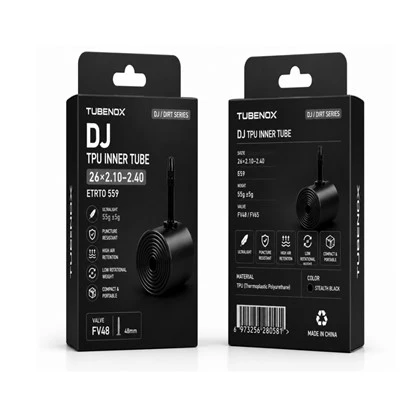
TPU stands for Thermoplastic Polyurethane, a high-performance material capable of delivering impressive strength with far less material than traditional rubber.
The first thing most cyclists notice is the weight.
A typical butyl road tube may weigh anywhere from 90g to 120g.
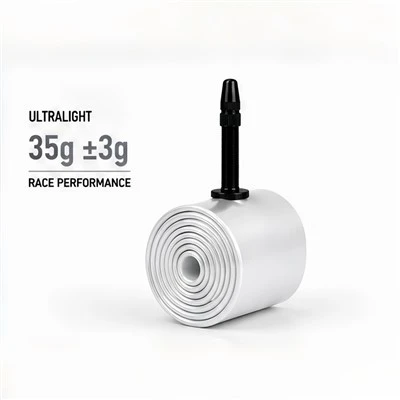
A comparable TPU tube can weigh as little as 25g to 45g.
That's a significant reduction in rotating mass.
But weight isn't the only advantage.
TPU tubes are also:
- More compact
- Easier to carry
- Often more responsive on the road
- Better suited to performance-focused riding
In other words, they're designed for riders who pay attention to details.
The Weight Difference Is Real
When people talk about TPU tubes, weight is usually the headline feature.
And for good reason. Let's look at a simple example.
Imagine replacing two 100g butyl tubes with two 35g TPU tubes.
You've removed approximately 130g from the wheels.
That may not sound dramatic on paper, but wheel weight behaves differently from frame weight.
Because the wheels are constantly accelerating and decelerating while riding, reducing rotating mass can make a bike feel more lively.
Many riders describe the sensation as:
- Quicker acceleration
- Easier climbing
- Improved responsiveness
Will it transform your bike overnight?
No.
But it's one of the more noticeable weight-saving upgrades available for relatively little investment.
Air Retention: The One Area Butyl Still Excels
If there's one category where butyl remains difficult to beat, it's air retention.
Butyl rubber naturally holds air extremely well.
A properly inflated butyl tube can maintain pressure for extended periods with minimal attention.
TPU tubes have improved dramatically in recent years, but performance varies depending on design and manufacturing quality.
Most modern TPU tubes offer excellent air retention, yet butyl still has a slight advantage in this category.
For riders who leave bikes sitting for weeks between rides, that may be worth considering.
For most active cyclists, however, the difference is rarely a deal-breaker.
Packability: Not Even Close
This is where TPU tubes shine.
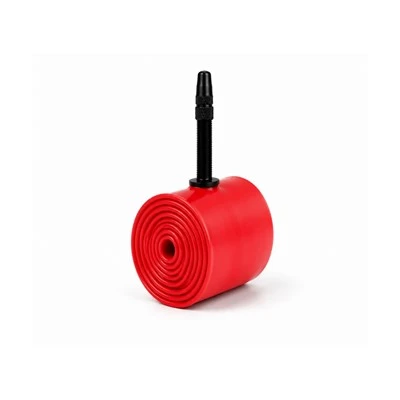
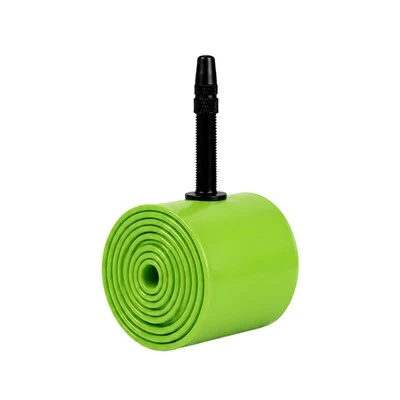
The first time you compare a folded TPU tube with a standard butyl spare, the size difference is almost surprising.
A TPU tube can often fit into spaces where a butyl tube simply won't.
For:
- Gravel riders
- Bikepackers
- Endurance cyclists
- Racers
that matters.
Less space occupied by a spare tube means more room for tools, nutrition, or other essentials.
It's one reason many tubeless riders carry a TPU tube as an emergency backup.
Which Feels Better on the Bike?
This question is surprisingly subjective.
Some riders report little difference.
Others notice a slightly more responsive ride feel.
The reality is that ride quality depends on many factors:
- Tire construction
- Tire pressure
- Wheel design
- Rider weight
- Road surface
The inner tube is only one piece of the puzzle.
However, reducing rotational weight does contribute to a more efficient riding experience, especially during repeated accelerations and climbs.
This is one reason performance-oriented cyclists often gravitate toward TPU.
What About Durability?
A common misconception is that lighter automatically means weaker.
That's not necessarily true.
Modern TPU tubes have become much more durable than earlier generations.
Advances in manufacturing have improved:
Material consistency
Seam quality
Valve reinforcement
Overall reliability
That said, durability often comes down to proper installation.
Pinching any tube during installation-whether TPU or butyl-can lead to problems.
When correctly installed and matched to the intended tire size, both tube types can provide dependable performance.

TPU vs Butyl for Different Riding Styles
Road Cycling
If your goal is maximizing efficiency and reducing weight, TPU generally has the advantage.
The weight savings become especially attractive for climbing and performance riding.
Winner: TPU
Gravel Riding
Gravel cyclists often value compact spare tubes and lightweight gear.
A TPU tube stored in a saddle bag takes up remarkably little space.
Winner: TPU
Mountain Biking
The answer depends on the type of riding.
Cross-country riders often favor TPU for weight savings.
Trail and enduro riders may prioritize durability, depending on terrain.
Slight Advantage: TPU
BMX Riding
For riders looking to reduce weight without sacrificing practicality, TPU can be an attractive option.
Winner: TPU
Daily Commuting
For commuting and casual riding, butyl remains a cost-effective choice.
The performance advantages of TPU may not be as important here.
Winner: Butyl
Cost: Is TPU Worth Paying More For?
This is where personal priorities come into play.
Butyl tubes remain one of the most affordable cycling components available.
TPU tubes cost more because:
Material costs are higher
Manufacturing is more complex
Performance benefits are greater
If you're looking purely at cost-per-tube, butyl wins easily.
If you're evaluating:
Weight reduction
Packability
Performance
Convenience
then TPU becomes much easier to justify.
Many riders view TPU as a small upgrade that improves multiple aspects of the riding experience at once.
Why More Cycling Brands Are Moving Toward TPU
The growth of TPU tubes isn't limited to consumers.
Many cycling brands and distributors are expanding their TPU product offerings because demand continues to increase.
Customers increasingly ask for:
- Lightweight bike tubes
- Compact spare tubes
- Performance upgrades
- Private-label TPU products
As a result, OEM TPU inner tube manufacturing has become one of the fastest-growing segments in the bicycle accessories market.
So Which One Should You Choose?
The truth is that neither option is universally better.
Choose butyl if:
You want the lowest cost
Maximum air retention is your priority
Performance gains aren't a major concern
Choose TPU if:
You want to reduce rotating weight
You value compact storage
You prefer modern performance-focused equipment
You regularly ride road, gravel, MTB, or BMX bikes
For many cyclists, TPU isn't replacing butyl because butyl stopped working.
It's replacing butyl because cycling technology has evolved, and riders are looking for ways to improve efficiency without making major equipment changes.
Final Thoughts
The debate between TPU and butyl tubes isn't really about right versus wrong.
It's about priorities.
Butyl remains a dependable, affordable, and proven solution that continues to serve millions of cyclists.
TPU, on the other hand, offers a more modern approach-lighter, smaller, and increasingly popular among riders who value performance and convenience.
If you've never tried a TPU tube before, the biggest surprise probably won't be the ride quality.
It'll be how something so small can make such a noticeable difference in the way you carry, store, and think about your cycling gear.