What makes TPU inner tubes different from butyl?
Butyl rubber has been the standard for bike inner tubes for decades. Most stock bikes and replacement tubes you find in local shops use butyl. It's a synthetic rubber with great air retention, low production cost, and a forgiving, stretchy texture that's easy to mount for beginners.
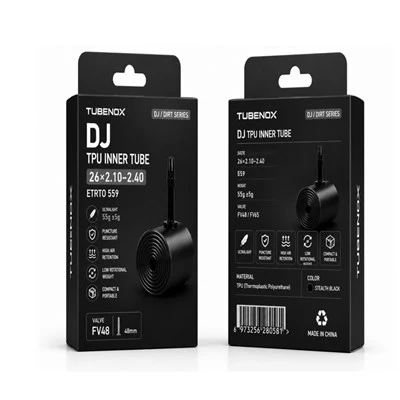
TPU, short for thermoplastic polyurethane, is a newer polymer material. Instead of thick rubber, TPU tubes are manufactured as an extremely thin film. That thinness is where almost all its unique traits come from.
Material difference is not just a marketing line. Butyl tubes are thick and elastic; TPU tubes are thin, flexible, and much more compact when folded. This single difference cascades into every performance tradeoff riders care about: weight, air hold, pinch flats and handling.
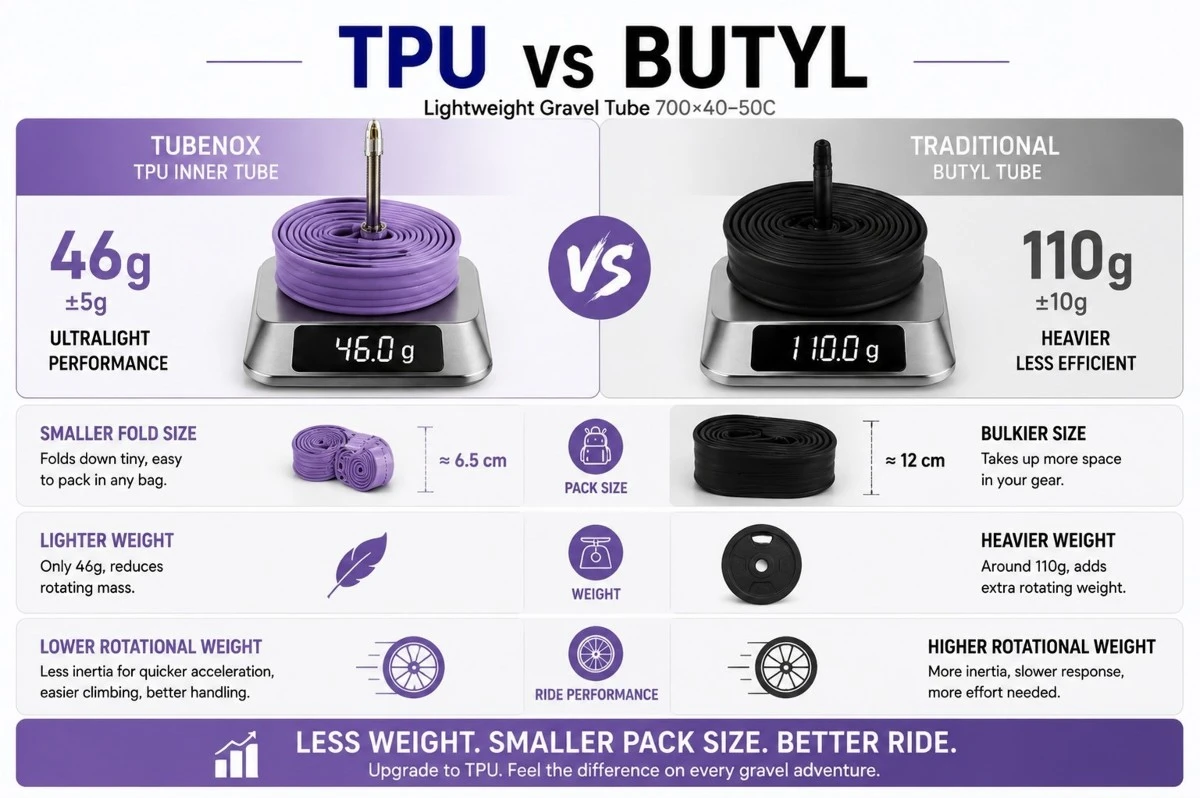
The biggest advantage: rotating weight savings
For cyclists, rotating weight matters more than static weight on the frame. Every gram you cut from wheels, tires and tubes accelerates and slows down with every pedal stroke. This is where TPU shines brightest.
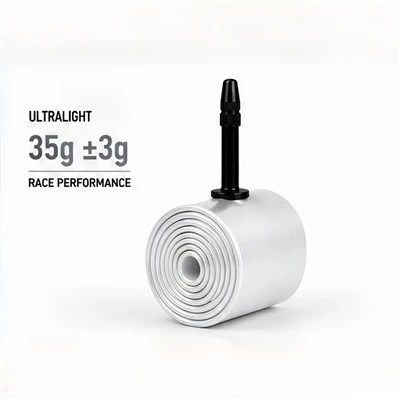
A standard butyl 700c road tube often sits around 90–110 grams. A comparable TPU tube can weigh 35–50 grams. Swap two tubes, and you easily shave more than 100g off your wheel set. For climbing, sprinting and race-focused riders, that upgrade is noticeable, especially when paired with lightweight rims.
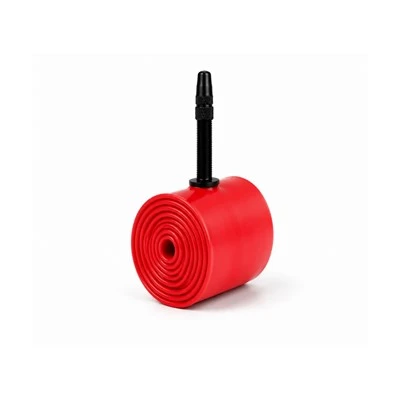
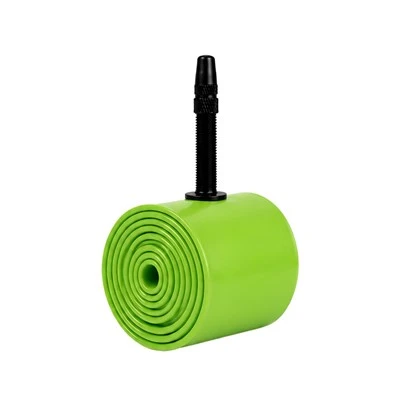
The second huge bonus is packed size. Fold a TPU tube and it shrinks down to roughly the size of a small energy bar. Two TPU spares fit inside a standard saddle bag without bulging out - something nearly impossible with bulky butyl tubes on gravel or bikepacking trips.
Air leak: the most complained TPU downside
This is the part no honest comparison can skip. TPU holds air worse than butyl.
Butyl rubber has very low air permeability. A butyl tube can hold pressure for a week or longer with only minor top-ups. TPU's thin film lets air seep through faster. Most riders need to inflate TPU tubes before every ride, or at least every other day.
This is not a manufacturing defect. It is a material property. If you hate pumping tires every time you head out, this alone can make TPU a bad fit for you. We always tell customers: TPU is fantastic for performance, but it is not a "set it and forget it" tube.
Puncture & pinch flat performance
Many riders assume thinner means easier to puncture, and that is partially true. TPU has less material to resist sharp thorns, glass and rock shards.
Where TPU surprises people is pinch flats. Pinch flats happen when the tube gets squeezed between rim and tire during a hard hit. A thin TPU tube sometimes avoids the classic snakebite pinch because it deforms more easily. Still, installation error is the #1 killer of TPU tubes. Pinching during tire mounting accounts for most early failures, not trail debris.
Butyl is more robust against small cuts and user mistakes. New riders, commuters, or anyone riding rough urban routes will usually get fewer unexpected flats with butyl.
Rolling resistance: TPU vs butyl vs latex
Rolling resistance tests show a clear hierarchy in most independent rider tests. Latex tubes offer the lowest rolling resistance, followed by good-quality TPU, then standard butyl.
The gap between TPU and butyl is measurable but not dramatic for casual riders. If you are training, racing, or chasing every possible watt saving, the lower rolling resistance adds up over long miles. If you only ride casually on weekends, the difference will be hard to feel.
One note: rolling resistance results depend heavily on tire pressure, tire casing quality and rim setup. The tube is just one piece of the system. Do not expect a TPU swap to turn a heavy old tire into a race setup.
Who should NOT buy TPU tubes?
TPU is amazing, but it is not for everyone. Save your money and stick with butyl if you match any of these:
- You are a new rider who struggles with tire installation
- You commute daily and do not want to pump tires before every ride
- You frequently hit potholes, broken glass and rough city pavement
- You want a tube you can inflate and leave in the bike for days or weeks
- You regularly use fast CO2 cartridges without slowing the inflation
- TPU is unforgiving. Fast CO2 expansion can overstress the thin film and cause sudden failure.
Quick installation tips to avoid pinching
Most TPU tube complaints come from bad mounting, not bad tubes. Follow these simple rules:
- Inflate the TPU tube just enough to give it a soft round shape before inserting it into the tire. Do not leave it completely flat.
- Run your fingers around both sides of the bead after seating the tire, double-checking the tube is not trapped under the rim edge.
- Inflate slowly. If you use CO2, use a regulator and fill gradually.
- Avoid sharp metal tire levers that can nick the thin TPU film. Plastic levers work better.
- Take your time. A careful install will drastically reduce your flat rate.
Size & valve length buying guide
Getting the right size and valve length is critical, especially for deep carbon rims.
Match the tube marked width range to your tire:
Road 700c: 18–28c for narrow race tires
Gravel 700c: 32–47c for wider gravel and all-road setups
MTB 29er: wide range options for trail and cross-country
For valve length:
Shorter 45mm valves work for shallow aluminum rims
65mm is the most common for mid-depth road rims
85mm long valves are required for deep carbon rims where the valve cannot reach the pump head
A valve that is too short is one of the most common ordering mistakes. Measure your rim depth before you place an order.
Final Verdict
Pick butyl if reliability, low maintenance and forgiveness are your top priority. It is the dependable workhorse for commuting, casual riding, and beginners.
Pick TPU if you want light rotating weight, tiny packed size, and minor rolling-resistance gains. It is perfect for road racers, gravel riders, bikepackers and anyone who carries multiple spare tubes in a small saddle bag.
Neither one is universally better. The best tube depends on where, how often and why you ride.
Shop our range of ultralight TPU inner tubes for road, gravel and mountain bikes. Multiple sizes and Presta valve lengths in stock for riders and bulk buyers.